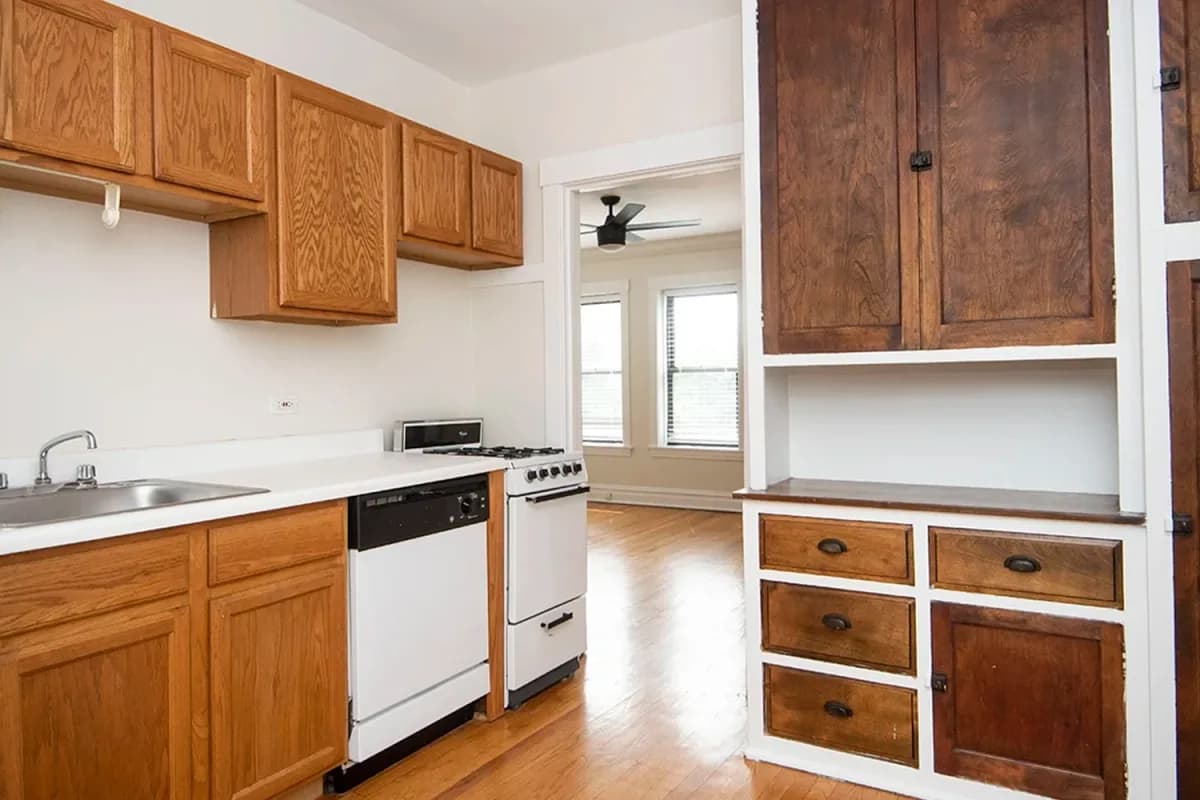
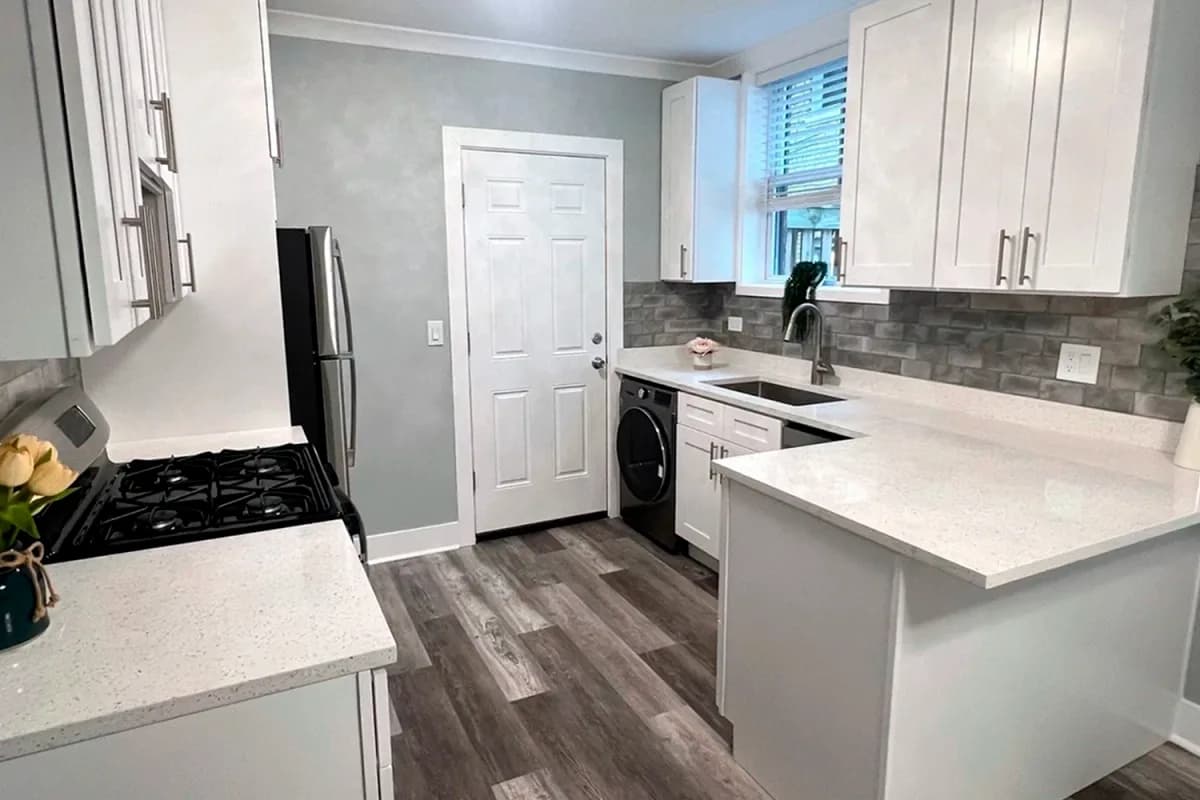
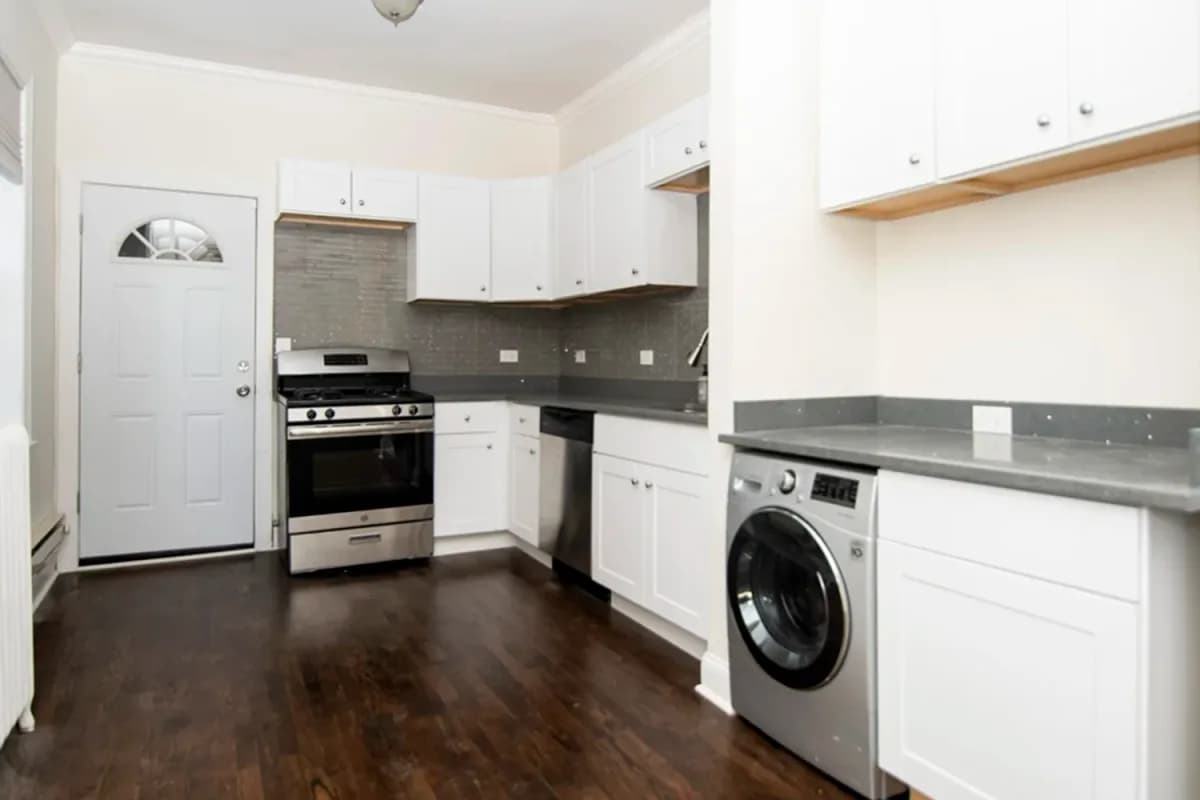
This updated studio at 2129 N. Dayton Street brings together rich, dark hardwood floors, restored white wood trim, and a bright, open layout that makes the most of every square foot. Large windows dressed with clean mini blinds pull in natural light throughout the day, while a ceiling fan keeps the main living space comfortable in every season. A deep double bi-fold closet offers genuine storage for a studio, a detail that is often missing in units this size, and the neutral wall color and crown molding give the whole space a crisp, move-in-ready feel.
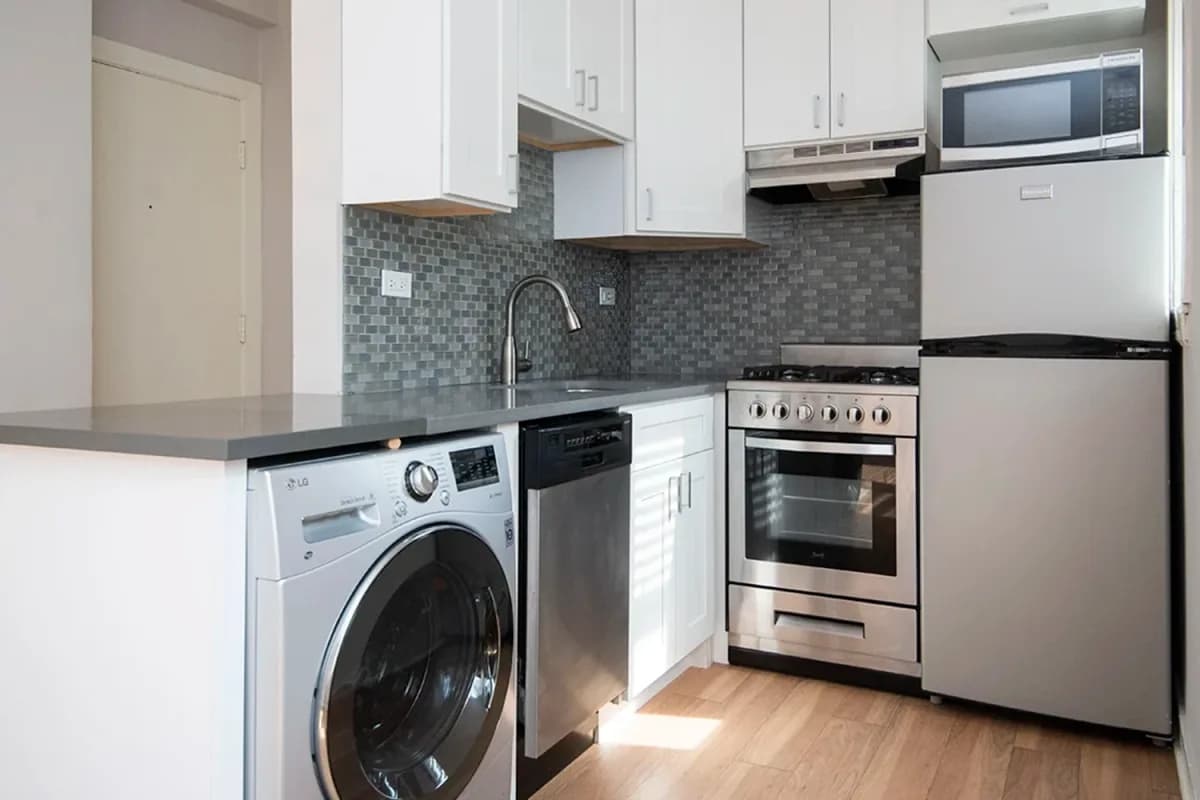
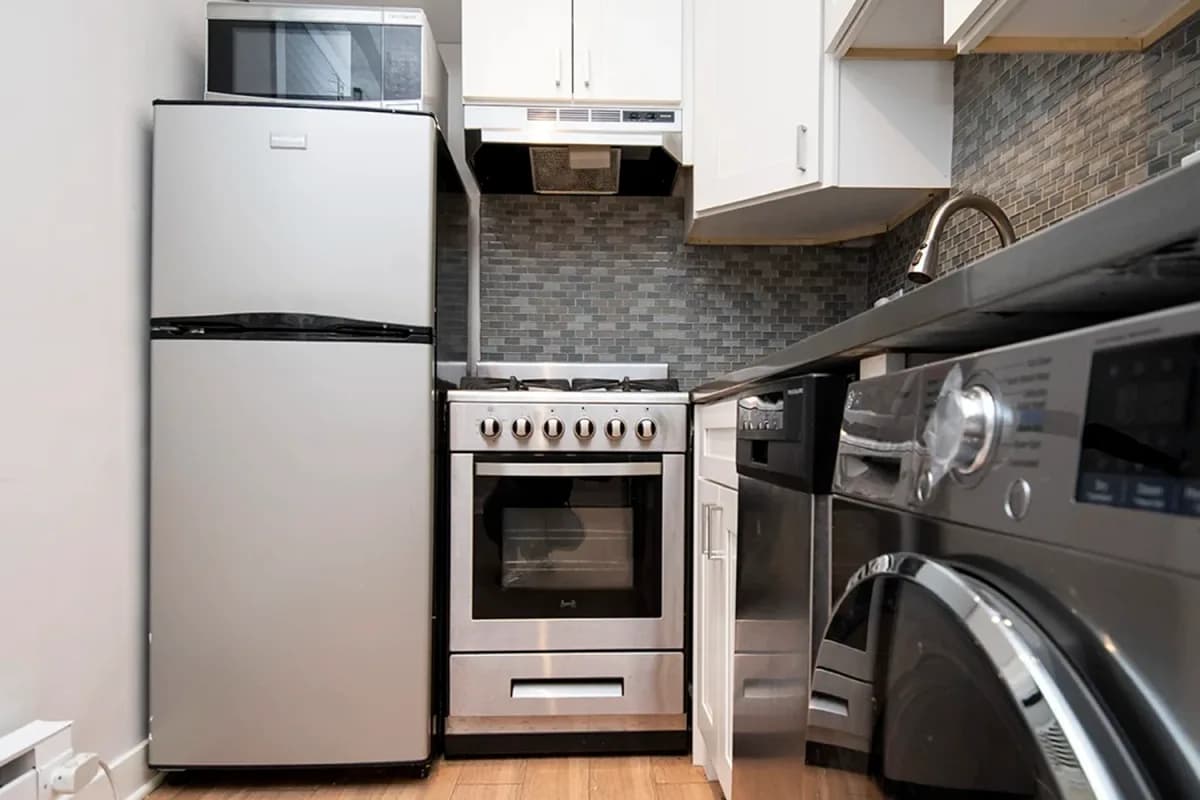
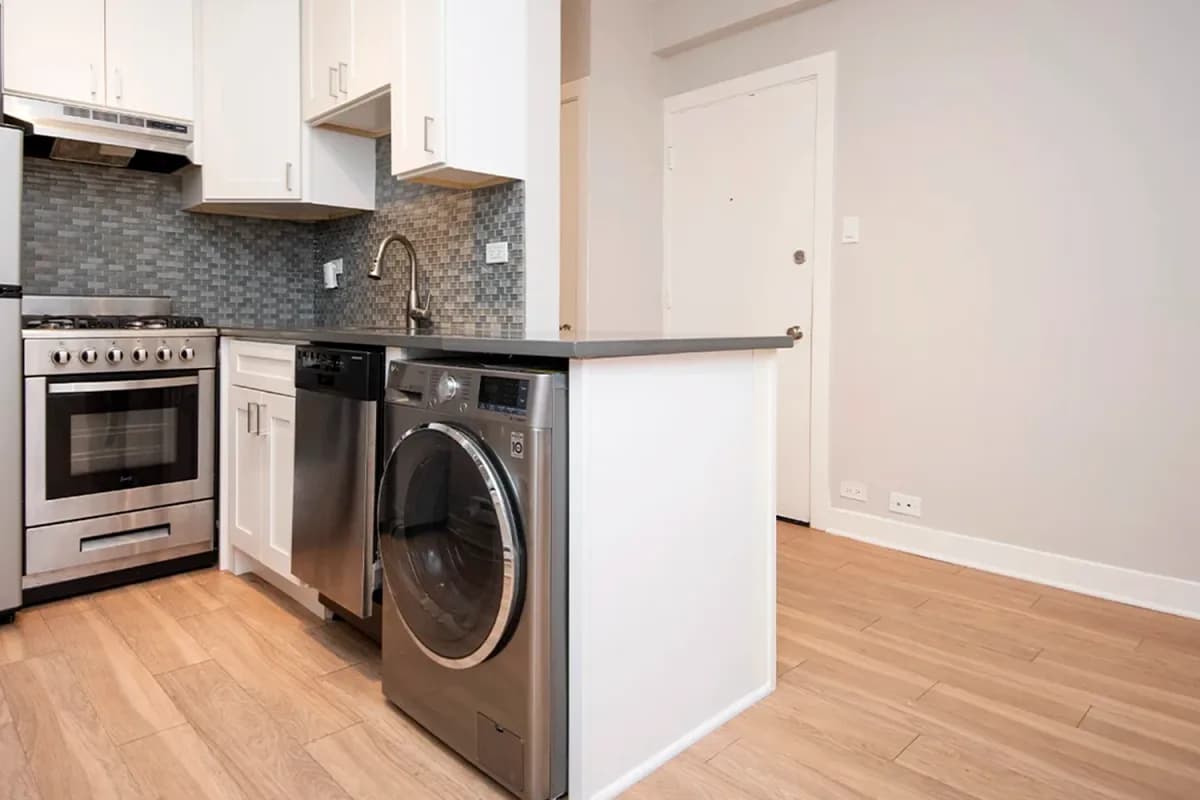
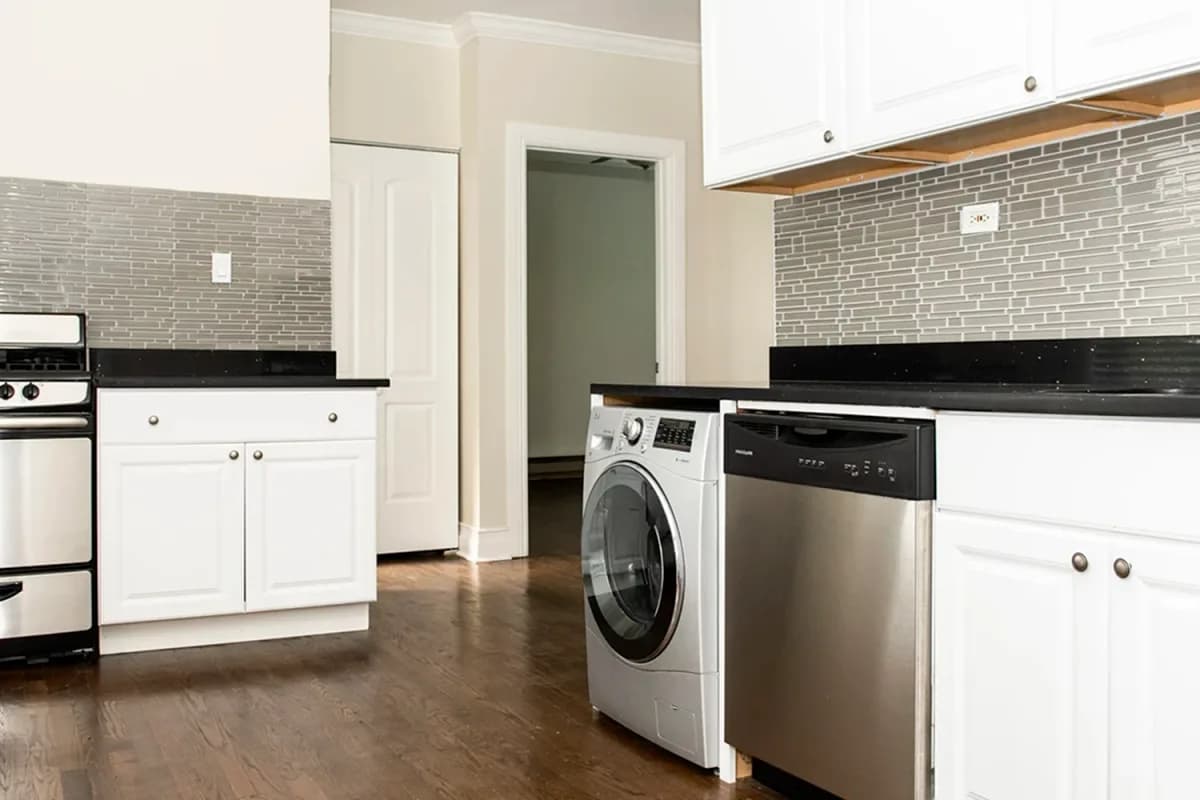
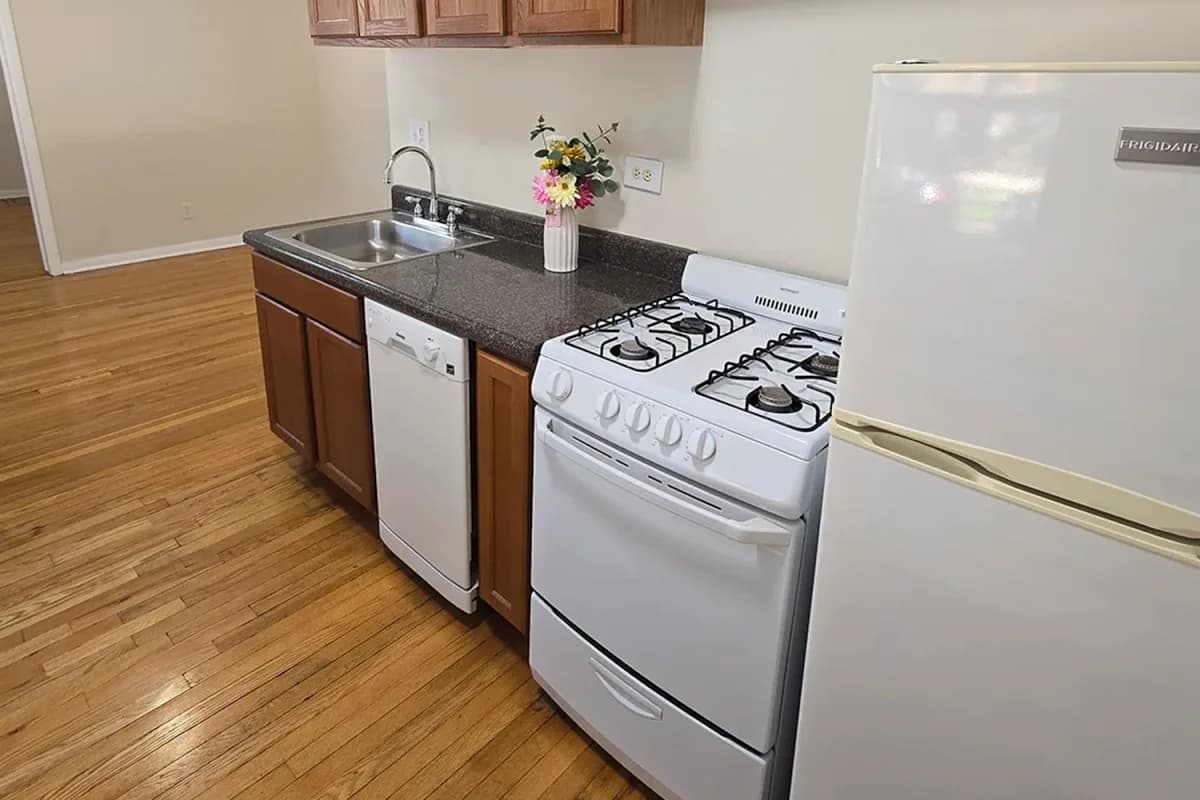
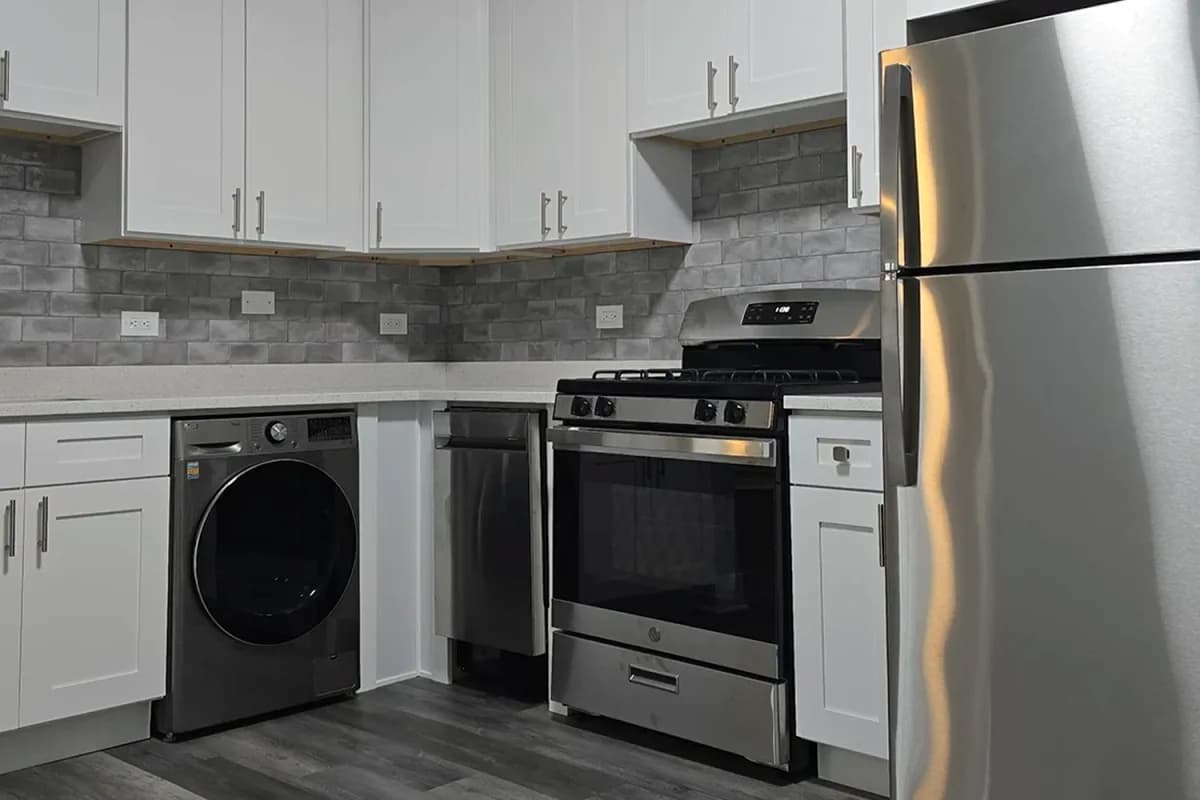
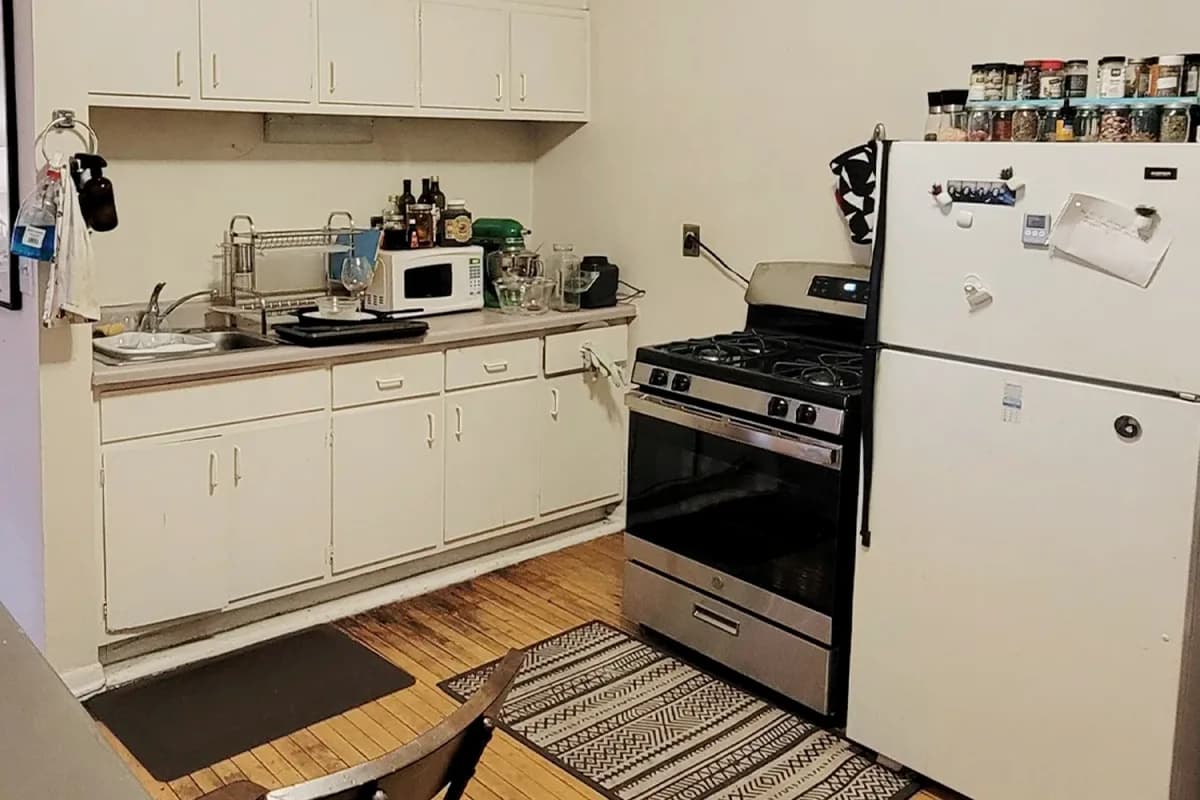
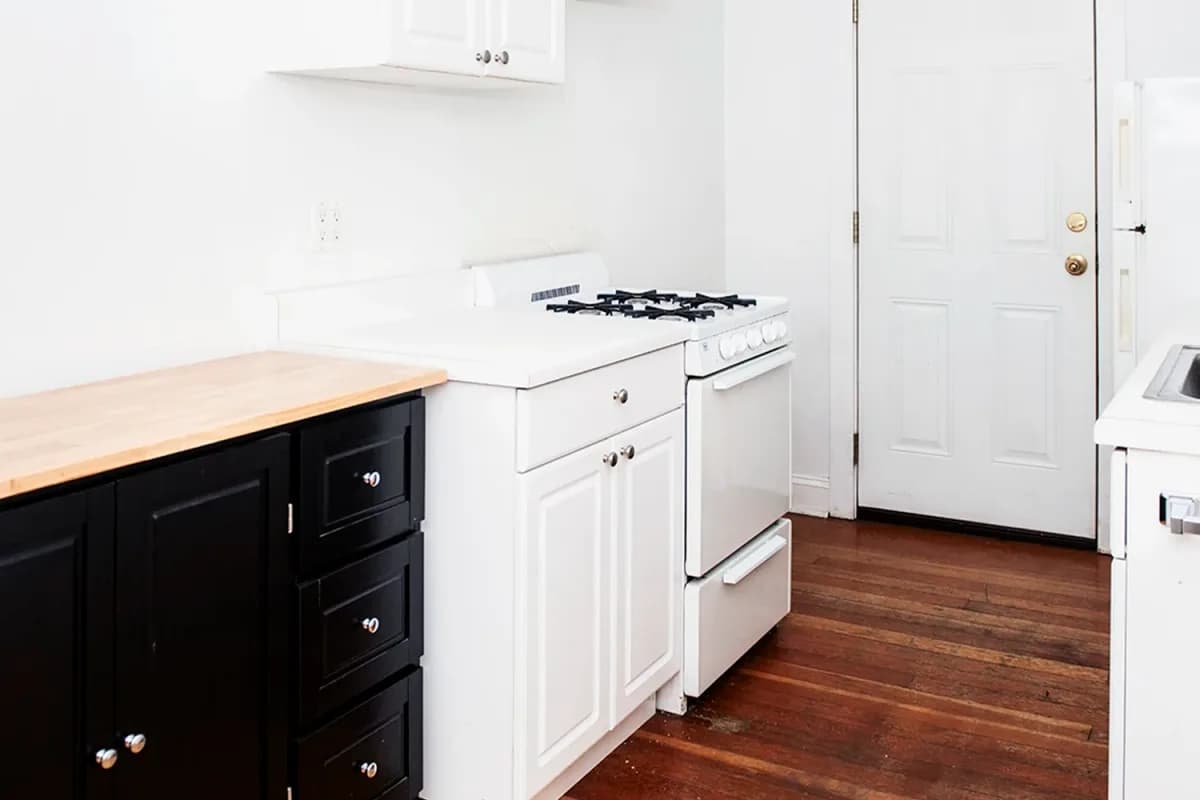
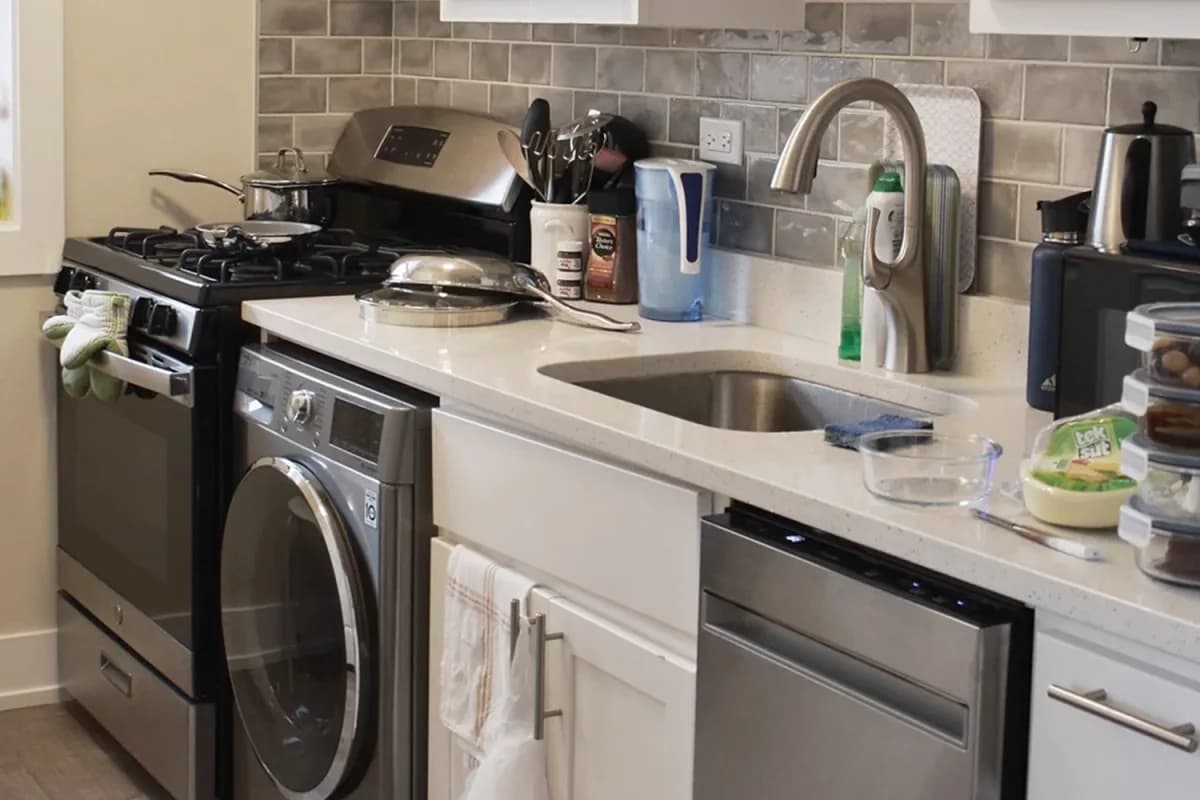
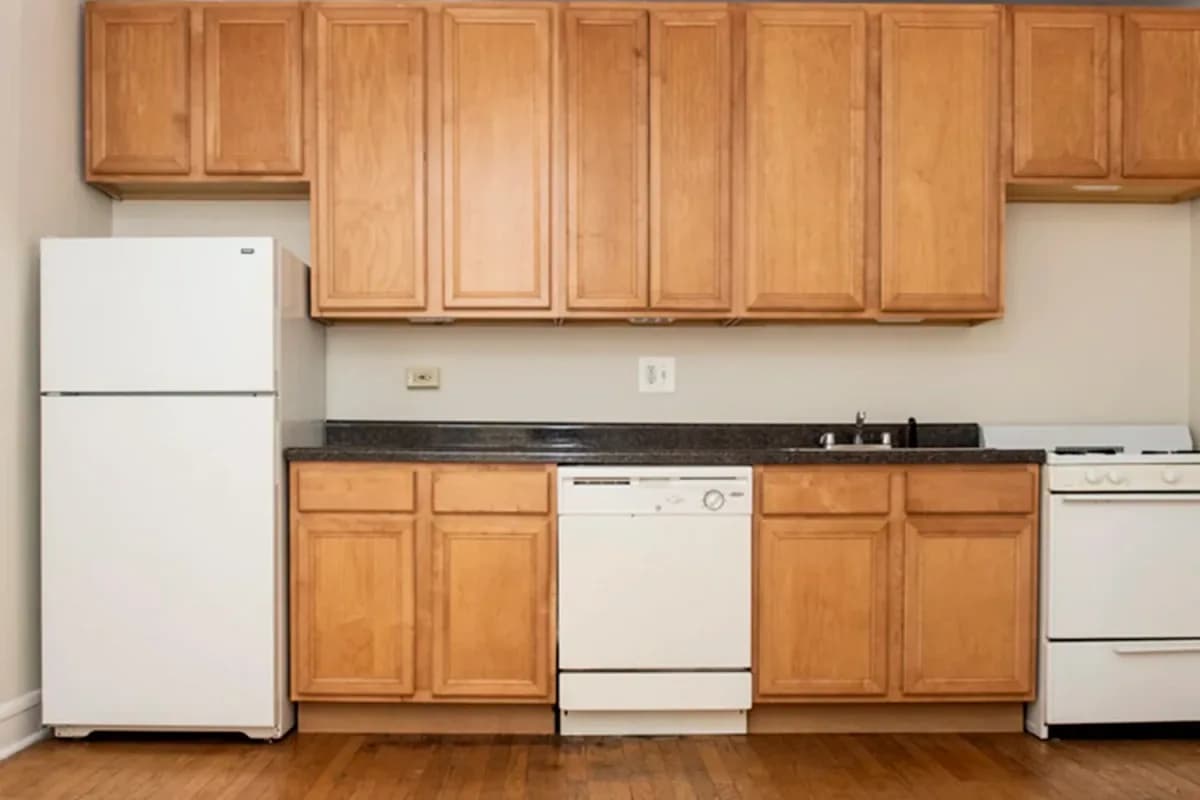
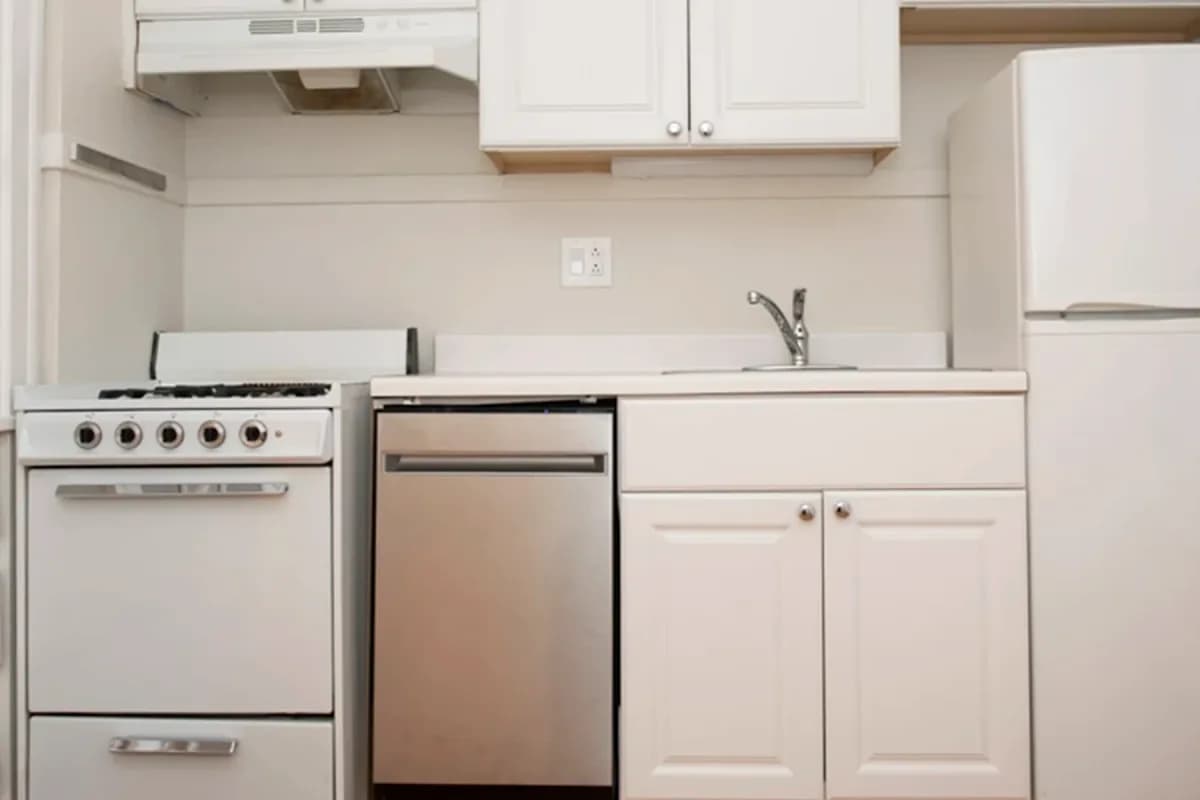
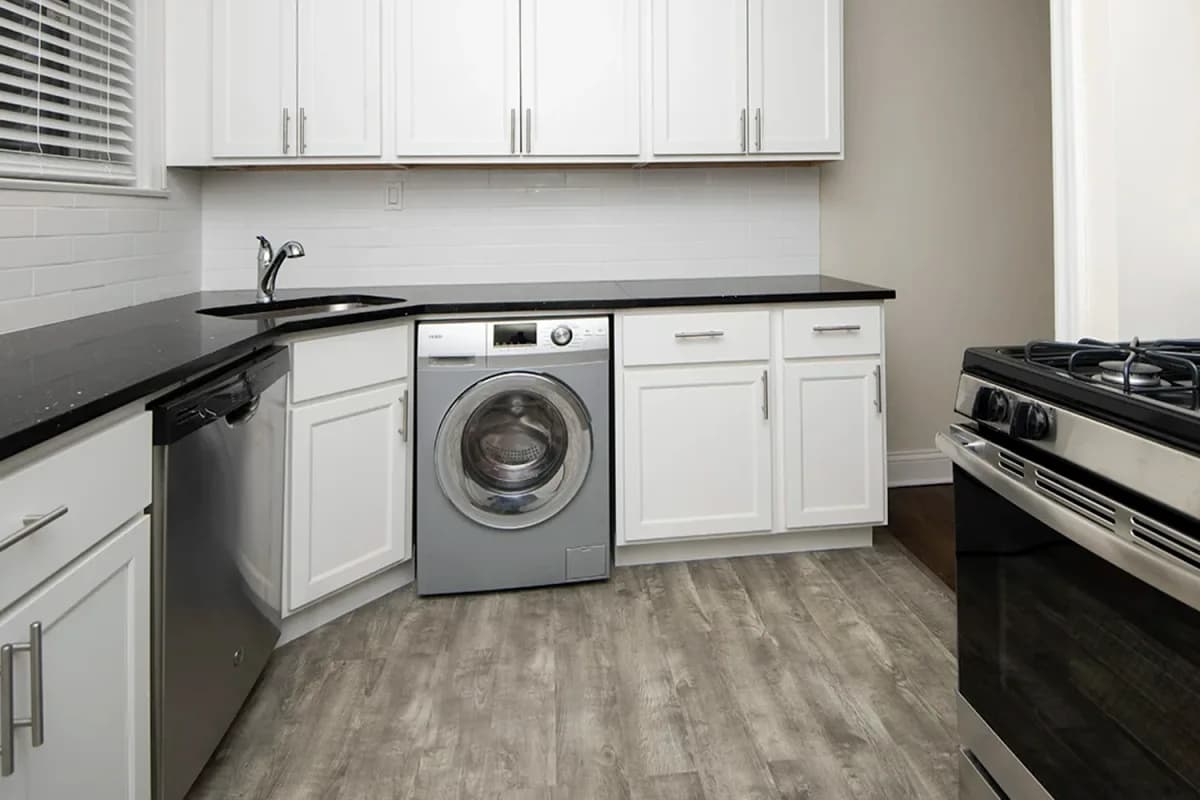
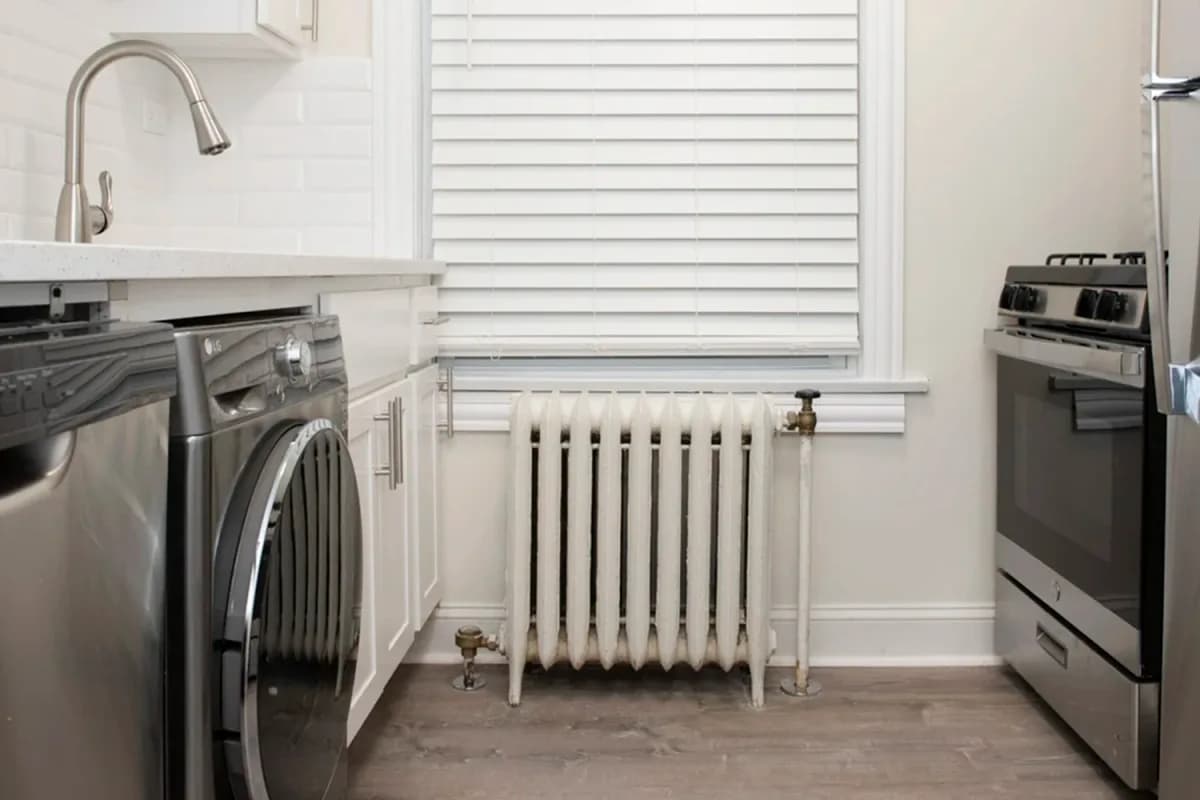
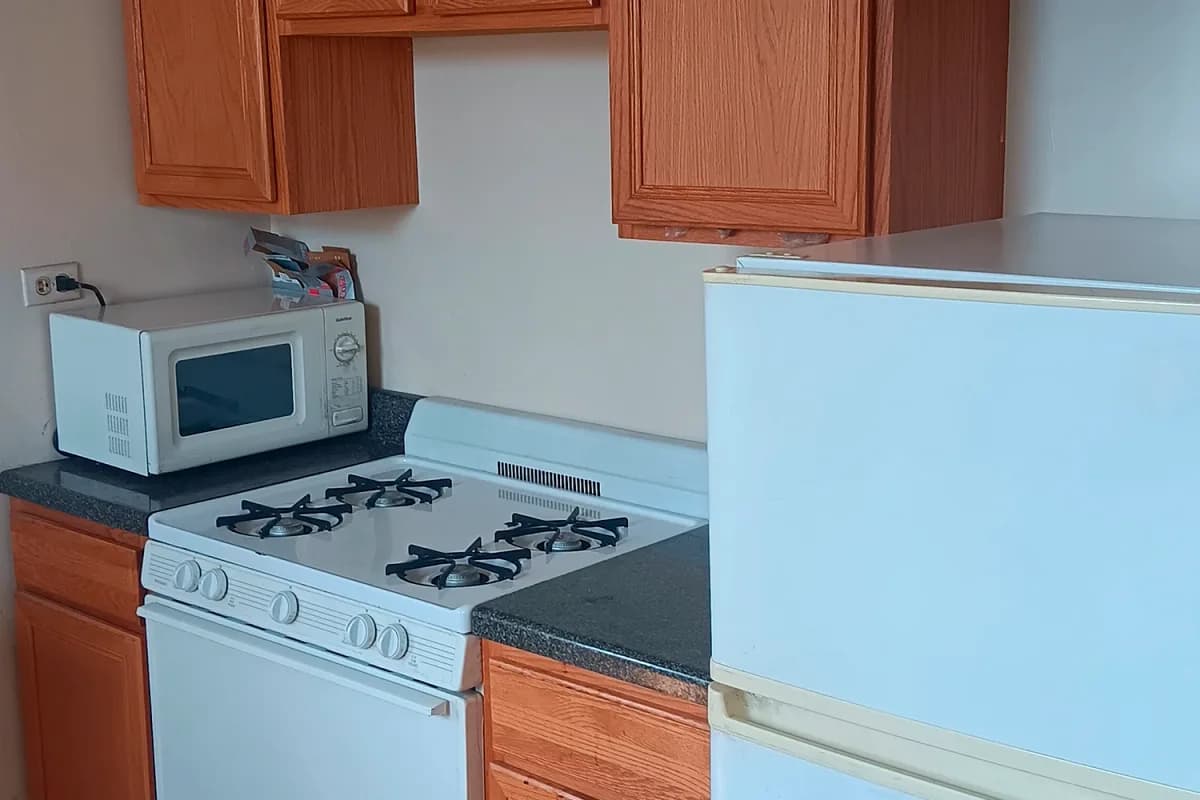
The updated kitchen is finished with white shaker cabinetry, black quartz countertops, and a glass tile mosaic backsplash that runs the full length of the wall, paired with a stainless steel gas range, a built-in dishwasher, and a compact stainless fridge with a top freezer. A stacked washer-dryer combo sits right in the kitchen run, so laundry never means leaving the building. The bathroom carries the same updated finish level, with floor-to-ceiling white subway tile, a dark charcoal mosaic accent band, a rich espresso-toned vanity topped with a clean white basin, and a full tub-shower combo lit by its own window for natural daylight.
Updated Apartments
Hardwood Floors
Restored Wood Trim
Updated Kitchen
SS Appliances
Washer/Dryer Combo
Dishwasher
Quartz Countertop
Backsplash
Updated Bathroom
Mini Blinds
Ceiling Fans
Plenty of Closet Space
Building Features
In-Unit & On-site Laundry
Cable/Internet Ready
Individual Electric Heater per Unit
Street Parking
Pet Policy
Cats Allowed
Dogs Allowed
2 Pets Max
No Weight Limit
What’s Included in Rent
Included
Water
Trash
Tenant Pays
Heat
Electricity
2129 North Dayton Street, Chicago, IL 60614
Walker's Paradise
97Walk
81Transit
90Bike
Transit & Commute
2129 N. Dayton St sits about a 5 to 7-minute walk from the Armitage station at 944 W Armitage Avenue, where the CTA Brown Line and, during weekday rush hours, the Purple Line Express both stop. From here it is a straight shot into the Loop on the north side's elevated tracks, with trains every 5 to 10 minutes during peak periods and roughly every 8 to 10 minutes off-peak. The 73 Armitage bus runs along Armitage Avenue a block from the building, connecting east to Lincoln Park and west toward Bucktown, and the 22 Clark bus, with 24-hour service, is a few blocks over at Clark and Armitage for a direct ride north to Andersonville or south to the Loop. With a fast 'L' stop and two bus lines this close to home, getting around the city rarely requires a car.
What’s Nearby
GoGrocer on Armitage Avenue covers daily grocery runs in about a 5-minute walk, and the Armitage-Halsted retail corridor, Lincoln Park's boutique shopping and dining strip, is close enough to reach on foot for coffee, dinner, or an evening out. Cafe Ba-Ba-Reeba on Halsted Street, a longtime Spanish tapas spot, is roughly a 6-minute walk for a sit-down dinner. Oz Park, about a 10-minute walk on Burling Street, offers a fenced dog park, a playground, tennis and basketball courts, and a community garden, and the full lakefront expanse of Lincoln Park itself, including Lincoln Park Zoo, is about a 15-minute walk east. DePaul University's Lincoln Park campus is also close by, adding the coffee shops and casual restaurants that come with a college neighborhood.
Currently Not Available
Lincoln Park
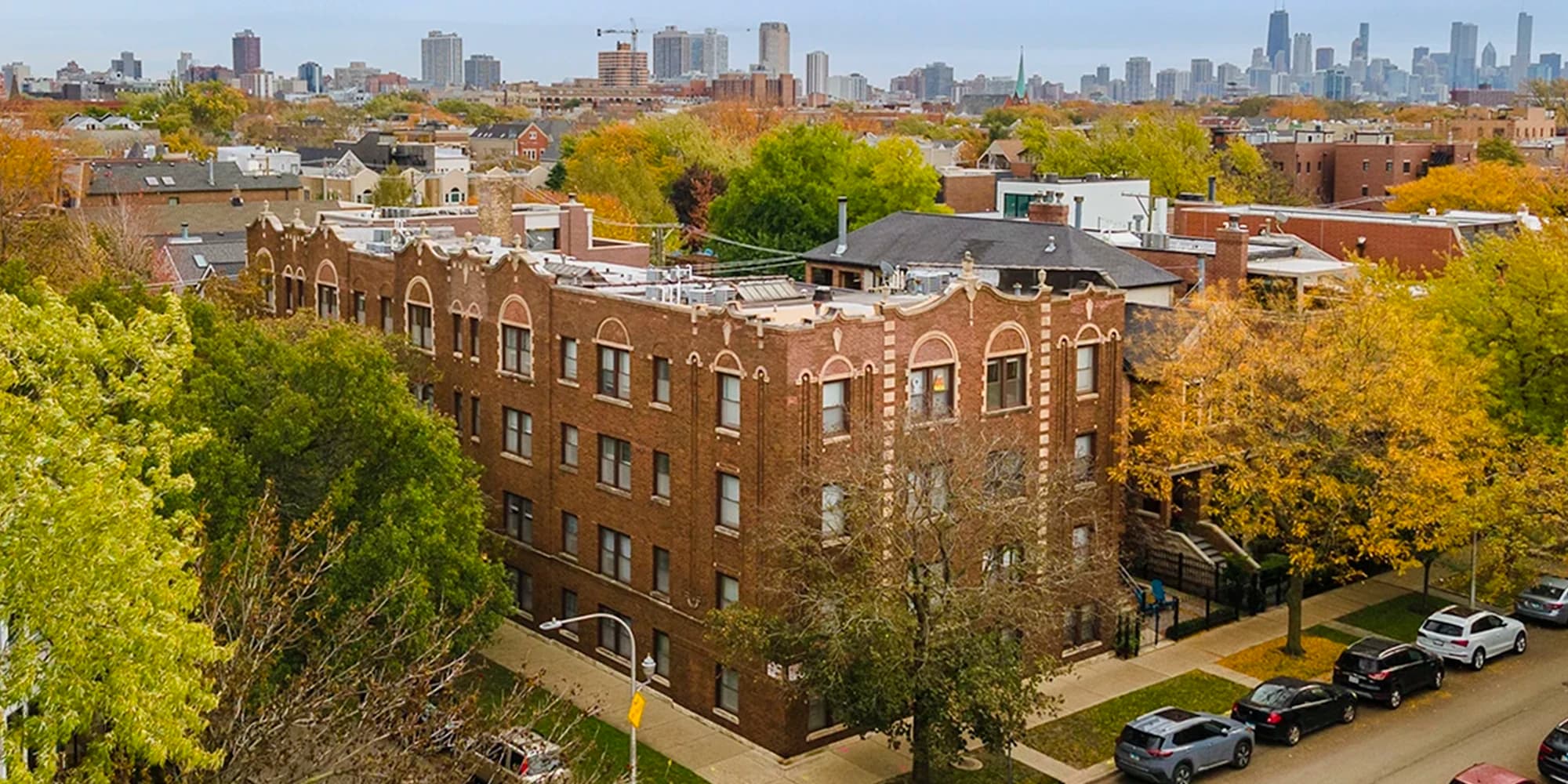
Lincoln Park takes its name from the 1,200-acre park that runs along its lakefront, itself renamed in 1865 to honor the recently assassinated Abraham Lincoln after decades as the city's original cemetery. The Great Chicago Fire of 1871 largely spared the area, and displaced families rebuilding north of the ashes turned Lincoln Park into one of the city's fastest-growing residential neighborhoods, drawing waves of German and Italian immigrants who found work in the factories nearby. DePaul University, founded here in 1898 as St. Vincent's College, still sets much of the neighborhood's tempo today, filling Armitage Avenue, Halsted Street, and Clark Street with a mix of college-town energy and upscale polish. Vintage greystones and courtyard buildings sit beside Michelin-starred kitchens and boutique storefronts, a contrast that has defined Lincoln Park since its mid-20th-century revival into one of Chicago's most affluent addresses. But the real draw is still the park itself: 1,200 acres of lakefront running north toward Edgewater, home to the free Lincoln Park Zoo, a Victorian-era conservatory, public beaches, a harbor, and miles of trail, all reachable on foot from nearly every apartment in the neighborhood, with the Brown and Red Line 'L' putting downtown minutes away.
Beach & Lakefront
North Avenue Beach
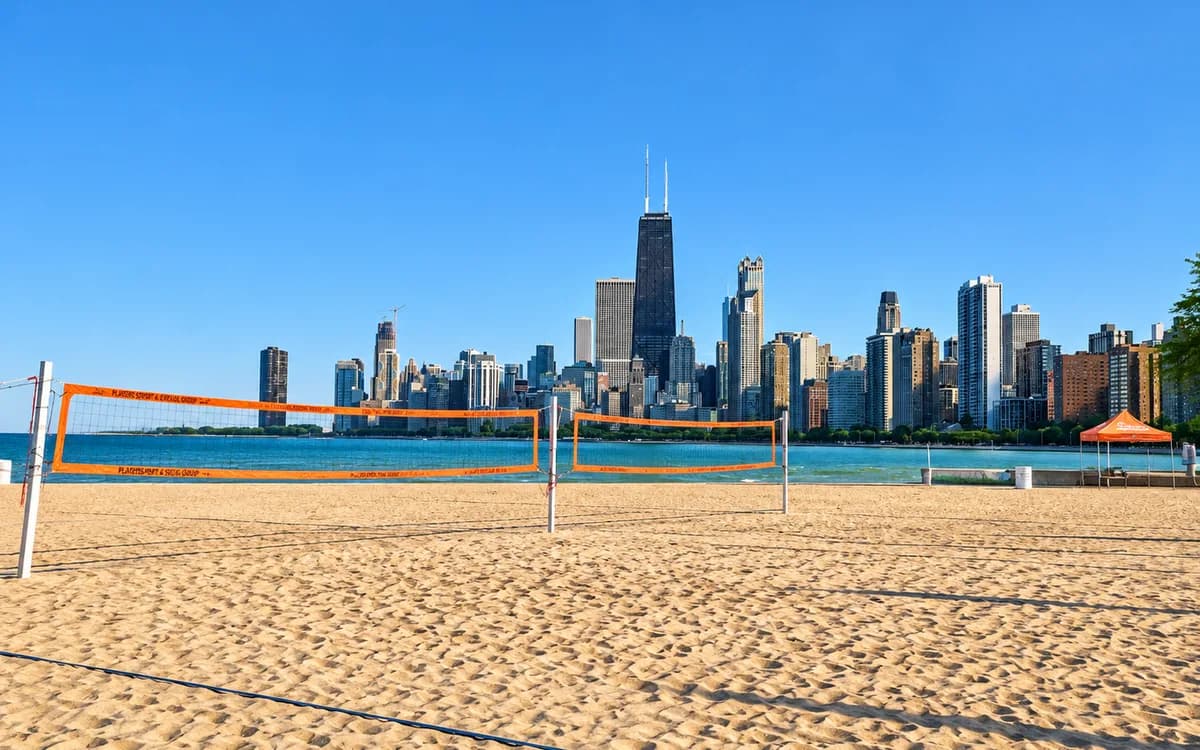
At the southern edge of Lincoln Park, North Avenue Beach is Chicago's busiest stretch of Lake Michigan shoreline, anchored by a ship-shaped beach house that has been a lakefront landmark since the 1940s. Sand volleyball courts, a seasonal beach bar, and miles of the Lakefront Trail for running or biking all sit right along the water, with a postcard view back toward the skyline and the John Hancock Center rising just behind the dunes. Lifeguards are on duty daily from late May through Labor Day, but the paved path and beach house stay open and usable well beyond swim season. A full lake day, including a skyline view most cities can't match, is a walk from home rather than a drive.
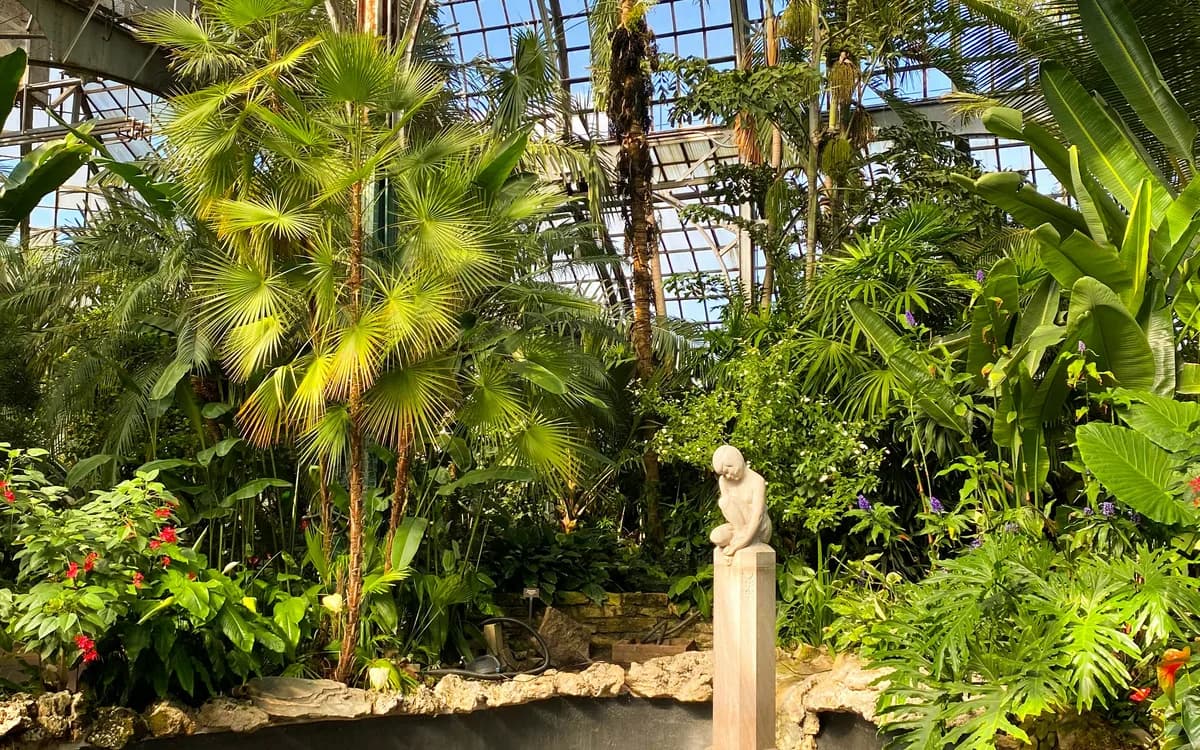
Tucked inside the sprawling 1,200-acre park the neighborhood is named for, the Lincoln Park Conservatory has been growing exotic plants under Victorian glass since 1893. Its four connected display houses, the Palm House, Fern Room, Orchid House, and Show House, hold everything from towering tropical palms to seasonal flower shows, all free to visit and open Wednesday through Sunday. Outside, the surrounding gardens and the park's lagoons and lawns stretch north and south along the lakefront, giving residents a genuine botanical escape, and a place to walk, run, or just sit outside, without leaving the neighborhood.
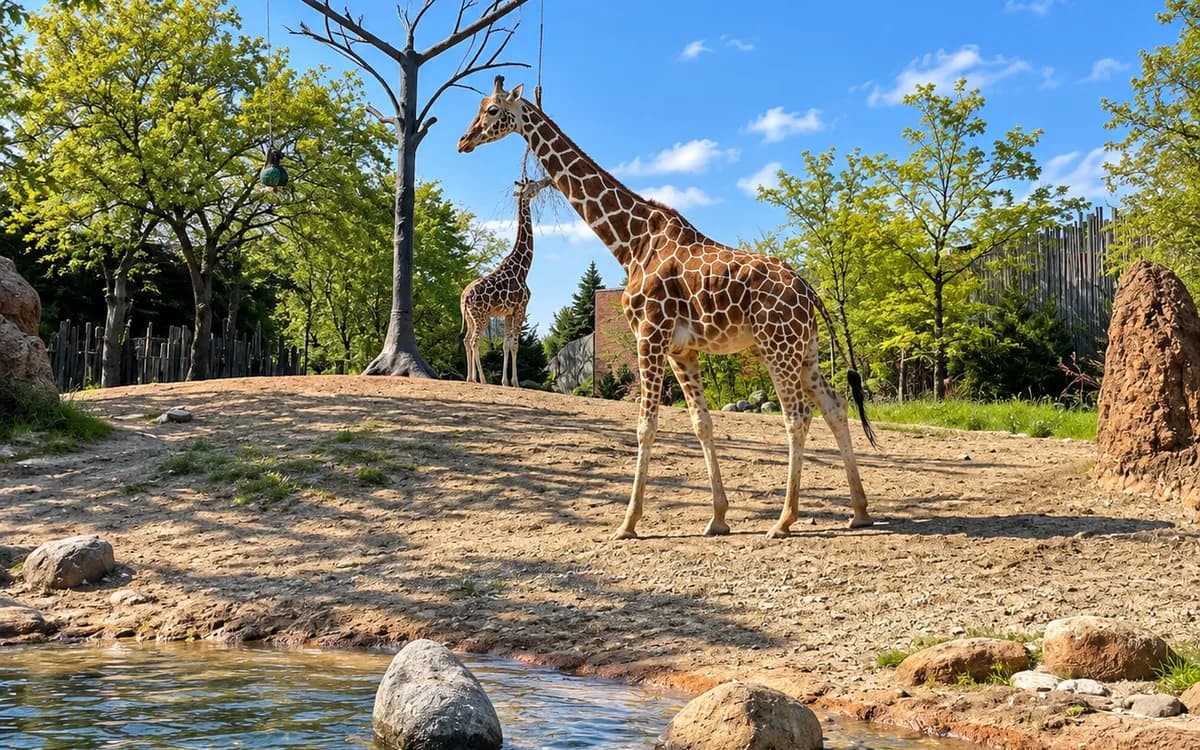
Founded in 1868, Lincoln Park Zoo is one of the last free, privately managed zoos left in the country, drawing millions of visitors a year to see its lions, great apes, and Regenstein African Journey exhibit without ever buying a ticket. It sits right inside the park, a short walk from the neighborhood's apartments, with the historic Farm-in-the-Zoo, a seasonal carousel, and the small, walkable grounds making it easy to drop in for an hour rather than plan a full day out. Free, year-round, and this close to home, it is the kind of everyday cultural anchor most city neighborhoods don't get.
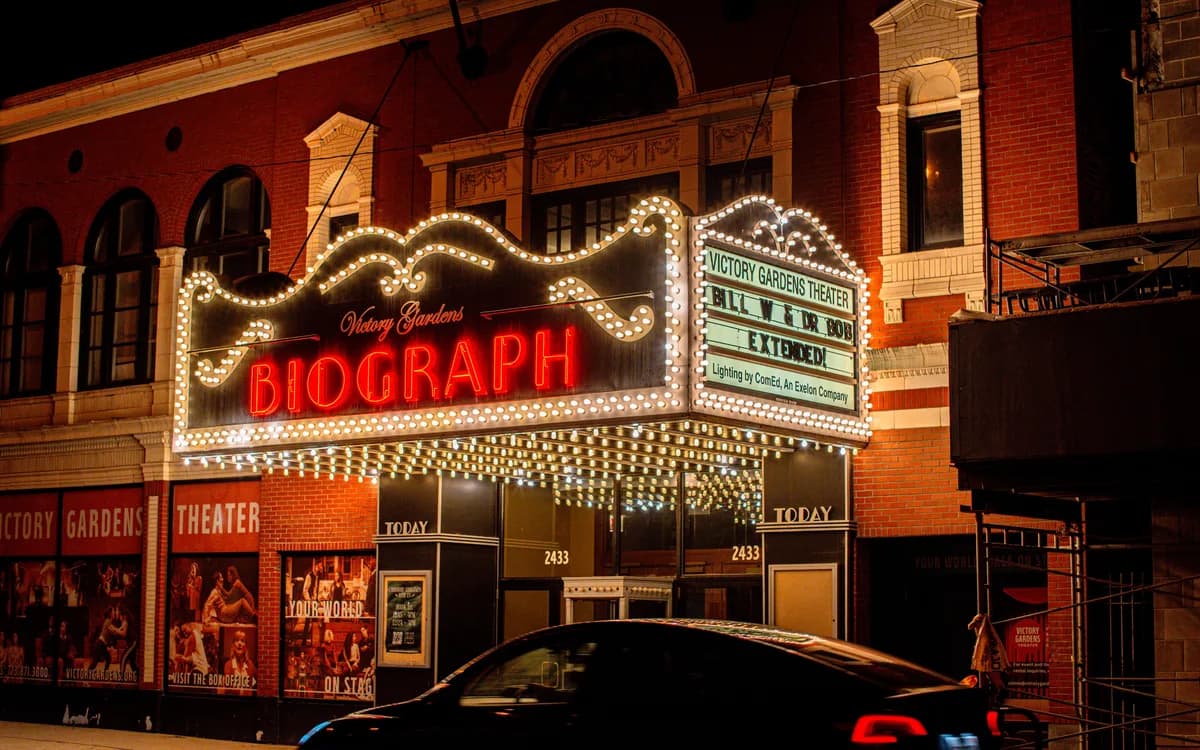
Built in 1914 and designated a Chicago Landmark in 2001, the Biograph Theater on Lincoln Avenue is best known as the spot where FBI agents caught up with bank robber John Dillinger in 1934, but its terra-cotta and red-brick facade earns its landmark status on architecture alone. After decades as a movie house, the building was renovated in 2006 and now operates as Victory Gardens Theater, staging new plays and regional premieres under the same restored marquee that has lit up this stretch of Lincoln Avenue for over a century. A working piece of Chicago history that still sells tickets, a short walk from the apartment.